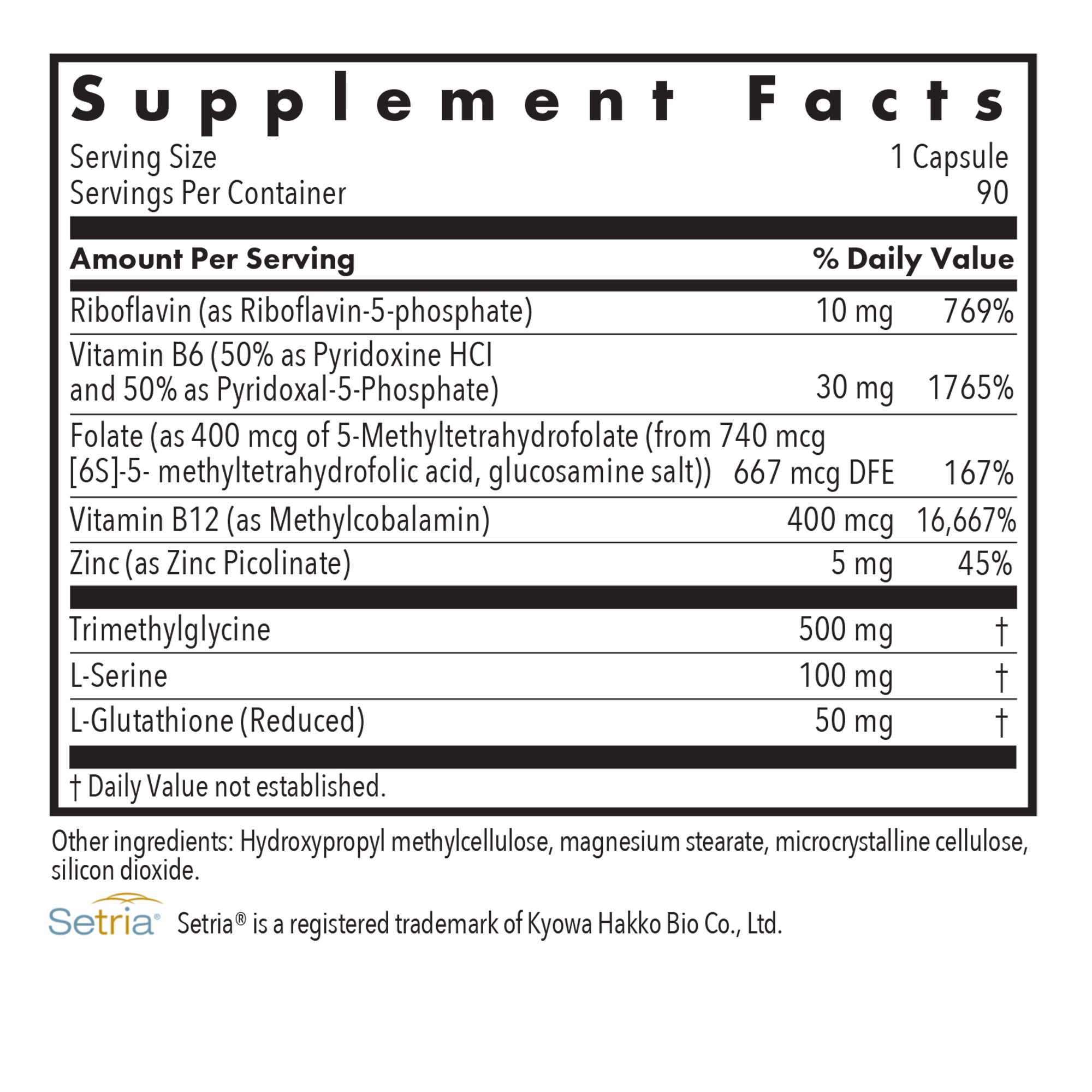
• L-methylfolate supplies activated folate to support the methionine cycle, bypassing MTHFR polymorphisms.*[3-4]
• Methylcobalamin is the bioactive form of vitamin B12, directly participating in methylation reactions required for homocysteine metabolism.*
• Trimethylglycine (betaine) supports homocysteine-to-methionine conversion via the BHMT pathway, a folate-independent route active in the liver and kidneys.*
• Serine contributes methyl groups for folate regeneration and promotes cysteine and taurine production for downstream antioxidant support.*[6]
• Zinc is a cofactor for both methionine synthase and BHMT enzymes that catalyze the remethylation of homocysteine.*[1]
• Vitamin B6 supports both the folate and transsulfuration pathways, supporting cysteine and glutathione synthesis.*[5]
• Riboflavin (vitamin B2) is a required cofactor for MTHFR and may enhance folate utilization in individuals with the 677TT genotype.*[3]
• Glutathione helps balance oxidative stress that may deplete methylation capacity by competing with SAMe synthesis for cysteine.*[7][2]
• The homocysteine to methionine cycle contributes to the formation of SAMe (S-adenosylmethionine) SAM-e which is central to creatine, neurotransmitter, and DNA methylation pathways.*[2]